No paddle fits everybody's game. A brand has to pick one weight and one balance point for a few hundred thousand players with different hands, different elbows and different ideas about what a third shot is for. So the paddle you bought is set up for the average of all of them, which means it's set up for nobody in particular.
That's why I think customization is required, not optional. And the cheapest and most reversible way to customize a paddle is a strip of weighted tape.
Here's the order I'd do it in. Play the paddle stock first, long enough to know what it actually does. Then figure out what's bugging you, because every spot on the paddle solves a different problem. Add a little weight there, play a session, and decide.
The two numbers that matter
Weight changes two things, and they feel different.
Swingweight is how heavy the paddle feels when you swing it. More swingweight means more power and plow-through on drives, and slower hands at the kitchen.
Twistweight is how much the paddle resists twisting when you hit off-center. More twistweight means a steadier face and a sweet spot that feels bigger.
Where you put the weight decides which one goes up. A gram near the tip raises swingweight far more than the same gram near your hand, and that's the whole reason placement matters.
The handle and butt cap
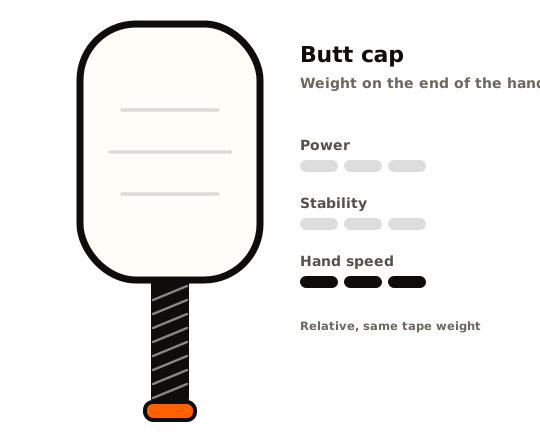
What it solves: a paddle that feels head-heavy and slow.
Weight down by your hand pulls the balance point toward you, so the head feels lighter even though the paddle got heavier. It adds almost nothing to swingweight and almost nothing to stability.
The trade-off: you're adding mass that doesn't make the face any steadier. It fixes balance and does nothing for mishits. And if you play sanctioned tournaments, check before you buy a stick-on cap weight. USA Pickleball lists every alteration a player may make, and aftermarket butt cap weights aren't on that list. Weighted tape is.
The throat
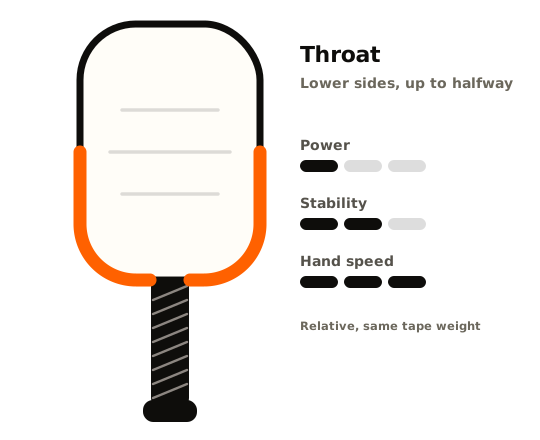
What it solves: a face that gets pushed around on off-center hits, without slowing your hands down.
This is my preferred spot, and it's where I'd tell anyone to start. Almost every paddle I play ends up with tape here. Tape at the throat and up the lower sides adds stability for very little swingweight. PickleballCentral's lab put the same 0.4 ounces of tape in different spots on one paddle. At the throat and bottom corners, twistweight went up 0.6 and swingweight went up just 1.1.
The trade-off: you get stability, just not quite as much as the same tape would give you at 3 and 9. What you keep is hand speed. Your hands stay as fast as they can be, and hand speed at the kitchen is the most important thing in my game, so for me it's the perfect trade.
3 and 9
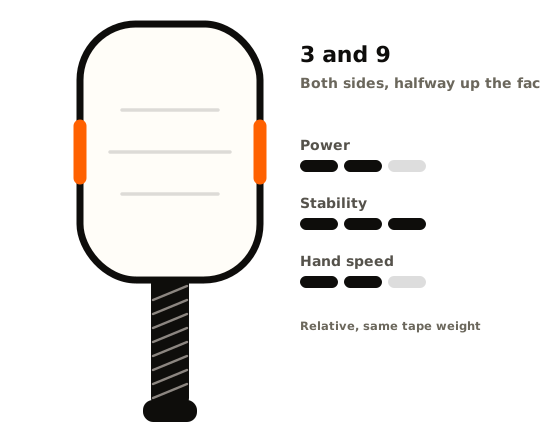
What it solves: an elongated paddle that twists on anything off-center.
This is the second spot I'd test, if the throat didn't steady the face enough. Weight on the sides, halfway up the head, gives you the most twistweight per gram. In that same lab test, 3 and 9 raised twistweight 0.8, a bit more than the throat. Elongated shapes are where this pays off most, because a narrow face starts with less twistweight to begin with.
The trade-off: it cost 3.5 points of swingweight, more than three times what the throat did. Plenty of good players tape here and they aren't wrong. They're paying more swingweight for a little more twist resistance.
The top
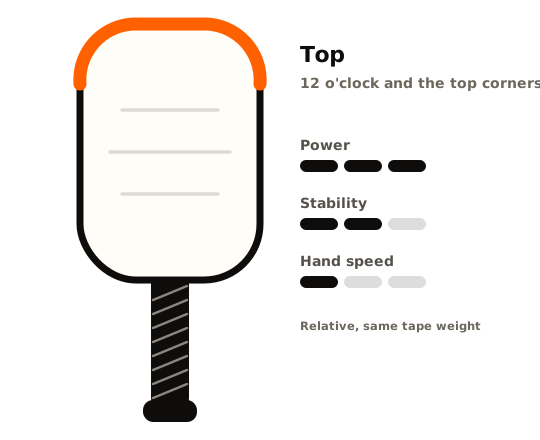
What it solves: drives that don't finish.
Weight at 12 o'clock and the top corners raises swingweight faster than anywhere else on the paddle. In the lab test, the top corners added 7.5 points of swingweight with the same tape that added 1.1 at the throat. That's real power, and real plow-through on a drive.
The trade-off: hand speed, and your arm. A head-heavy paddle is slower in a fast exchange at the line, and weight that far from your hand puts more load on your elbow every swing. If you've ever had tennis elbow, be careful up here, or skip it.
Lead tape vs tungsten tape
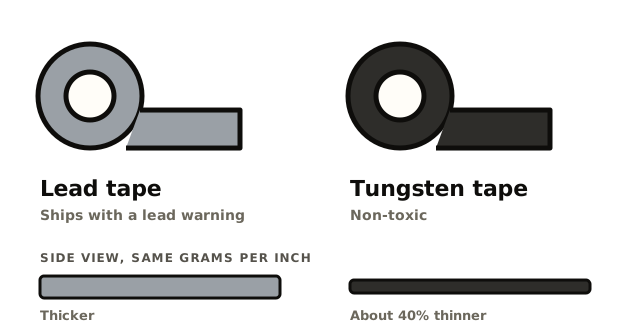
Everyone still says "lead tape." Most of what's on the shelf now is tungsten, and you can buy it pretty much anywhere you'd buy an overgrip.
Tungsten is the better choice. It's non-toxic, so you're not handling lead every time you touch the edge of your paddle (lead tape ships with a cancer and birth-defect warning in California). It's also denser, so the same grams take up a thinner strip.
Tape comes in a few strengths, and the number on the package is what matters:
| Tape | What it's good for |
|---|---|
| 1/4 gram per inch | Tiny adjustments. Mostly old-school lead tape from tennis |
| 1/2 gram per inch | My pick. Easy to sneak up on the right amount |
| 1 gram per inch | Most tungsten rolls. Fine if you know what you want |
| 2 grams per inch | Exists. Five inches of it is 10 grams, which is a lot of paddle to add at once |
Lighter tape means more inches for the same weight, and that makes it easier to spread the weight along the edge instead of piling it in one spot.
Removable weights
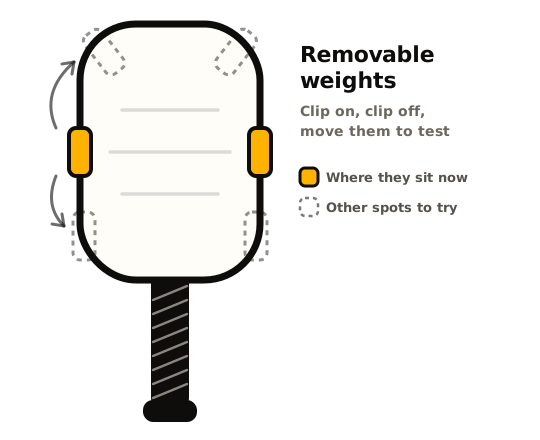
The other option is a paddle built for it. Selkirk's Boomstik started with weight built into the sides. The OMNI improved on it with two 7.5-gram weights that clip on and off the edge guard and move to different spots, with a guide printed on the face showing where they go. Other brands have followed with removable systems of their own, and there are now companies selling clip-on weights that go on any paddle with an edge guard.
They're a great way to test placement without peeling tape off and starting over. I still use tungsten tape. Tape lets me put any amount anywhere on any paddle I pick up, and that's a personal preference more than a knock on the weights. One tournament note: factory weight systems are legal, but USA Pickleball's list of allowed changes covers the manufacturer's own weights, not aftermarket clip-ons. Same caveat as the cap weights.
How much to add, and how to know it worked
Start small. Somewhere around 2 to 6 grams total is where most people should begin. Weigh the paddle on a kitchen scale before and after so you know the real number.
Always tape in matching pairs, the same amount on both sides, or the paddle wants to rotate in your hand. Then play a full session before you change anything else, and judge it with two tests:
- The reset test. Can you still take pace off a hard drive and drop it in the kitchen? Too much weight up top makes resets pop up.
- The hands battle. In a fast exchange at the line, are you getting the paddle up in time? If you're suddenly late, the tape is too high or there's too much of it.
If both got better, keep it. If one got better and one got worse, move the tape before you add more.
My setup
Half-gram-per-inch tungsten tape, about five inches on each side, starting at the throat and running up toward the middle of the paddle. That's about five grams total. It steadies the face on mishits and I don't feel it in my hands.
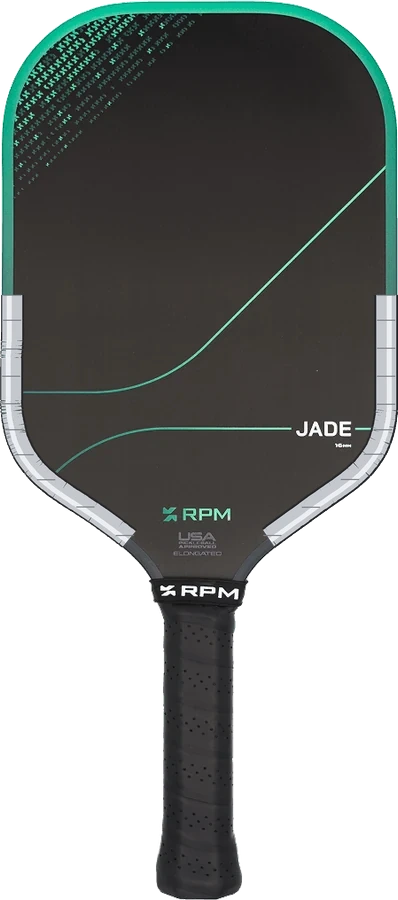
On a light paddle I go further up the edge. The RPM Jade ships at about 7.8 ounces and felt jumpy on off-center hits until I ran tape from the throat to about halfway up, and the sweet spot changed completely. The 11SIX24 Ultré Power 2 only needed the five inches.
A paddle off the shelf is a starting point. Five grams in the right spot is what makes it yours.