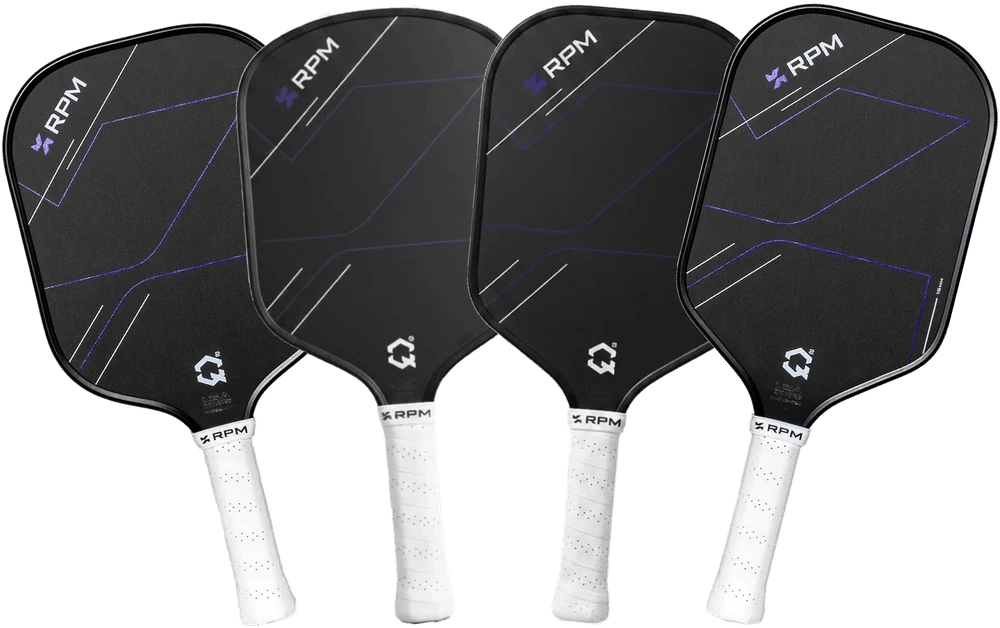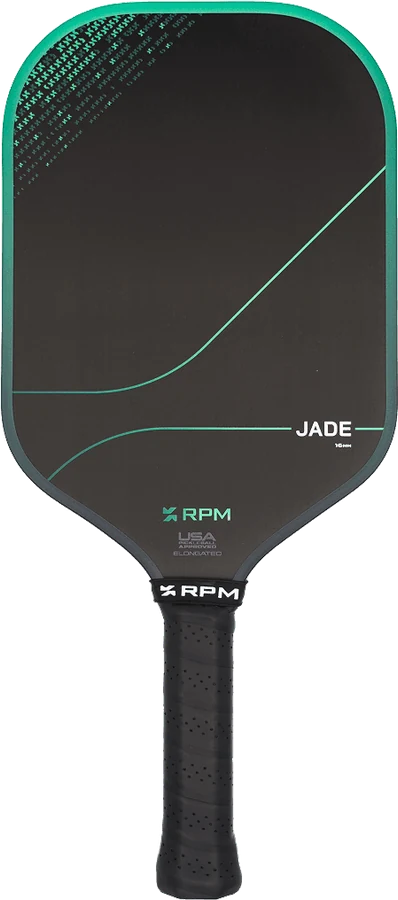
Before I'd hit the RPM Jade, I said on camera it was a paddle I'd buy. That was faith and a good track record, nothing more. RPM sent the Jade to zero reviewers before launch, me included, and the hype filled the gap: James Ignatowich on every podcast (I interviewed him on October 1), a mountain of pre-orders, and one question under every video. Will it live up to it?
My bias, up front: I'm an RPM guy. The Friction Pro and the V2 were my main for nine months last year, and the Friction Pro might be my favorite paddle of all time. I like the Q2 and enjoyed its power. And I said I'd buy this one before I'd hit it. Adjust accordingly. Then hear me out, because the first five hours almost talked me out of it. The Jade is my new main, the highest-rated paddle I've reviewed this year, and it's not the Q2 with better grit. It's closer to the Friction Pro with better grit, and that's the paddle I wanted.
Spin is the whole point
Shaping the ball is what I want out of a paddle more than anything, and this is the best I've had at it. On Pickleball Studio's rig the Jade measured 2,423 RPM, about 300 more than the Q2 and the V2 on the same machine. Every other reviewer I've read agrees on exactly one thing about this paddle, and it's this.
Here's what that spin buys you in a game. You can swing harder and the ball still comes down inside the baseline. Speed-ups get easier because you can roll them over instead of flattening them out. Drives dip. And pickleball in 2026 is about attacking as much as you can and resetting as little as you can, so a paddle that lets you take a bigger cut with less risk is a paddle that wins points.
The other half of the pitch is that the spin lasts. RPM says John Kew's cannon test passed the Jade at his Tier 1, the top grade for grit that holds up. Kew hasn't published the number yet, so treat that as RPM's claim. What I can tell you is that the face still bites after the hours I've put on it. Every other RPM paddle in Kew's database sits at Tier 4, so if the Jade's result holds on production units, it's the biggest jump in grit any brand has made inside its own lineup.
The Breaking Bad of paddles
Everybody told me to get past the first season of Breaking Bad. I didn't love season one, and asking someone to invest that many hours on a promise felt like a lot. I did it anyway, and it might be the best show ever made.
The Jade is the same deal. The first five hours, it was good and not great. I drilled with my wife, who's a 2.5, and I liked the feel right away: hollow and thuddy, not dense, not a board. That sound was my main complaint about the 11SIX24 Power 2 line, so it was a relief. But I couldn't tell yet how good the paddle was.
After about five hours, it got better every session. My guess is the MPP foam loosens up. It does two things that sound like they can't both be true: it gets softer and it hits harder. The trampoline effect grows a little, so does the dwell, and it started to feel like the Friction Pro with more spin. That was the moment I knew. RPM says the MPP core is built to break in and get more powerful, and on my unit it did exactly that. Other reviewers who called it rough out of the box mostly had a session or two on it.
Where it lets you down
It comes in light, and it needs weight. I took it to a tournament, played terribly, and lost to people I'd never lost to. I drove home ready to blame the paddle. Some of that was me. But the Jade ships at about 7.8 ounces (some owners report 7.6), and RPM lists its twist weight at 6.2, a touch below the middle of the 145 paddles in my database. Light and average-forgiving is a combination you feel on off-center hits.
My fix was lead tape, half a gram per strip, running from the throat to about halfway up the paddle. It completely changed the sweet spot and gave me the stability I'd been missing. Other reviewers put their weight at 3 and 9 o'clock instead. Either way, assume you'll be tuning this one. Almost everyone should.
Power is the other surprise. I'd heard it was only 2% under the Q2. To my hands it's at least 5% under. It's still a power paddle, just not a cannon, and if you bought it expecting the Q2 with better grit, you'll be disappointed.
Then there's the price. $269.99 puts it in the most expensive tenth of the paddles in my database, and even $229.50 with code NICOTHELEFTY lands in the top third. RPM's warranty covers manufacturing defects for life, three claims per paddle as of November 2026, and lists grit smoothing as not covered. So the durable grit still rests on RPM's word, though RPM now puts a lot more behind it.
How it stacks up
- vs. RPM Q2 ($249.99): the Q2 hits harder. I enjoyed that power, but I wasn't always good enough to keep it in the court. The Jade gives back some of that power for control and spin, and its grit is built to last where the Q2's fades. If the Q2 never ran away from you, it's still the bigger hitter.
- vs. RPM Friction Pro V2 ($249.99): the closest relative, and the paddle I held the Jade up against from the first hit. Similar soft, hollow feel and similar power once the Jade breaks in, with a lot more spin and grit built to last. Unless you need the Gen 3 feel exactly, the Jade is the upgrade.
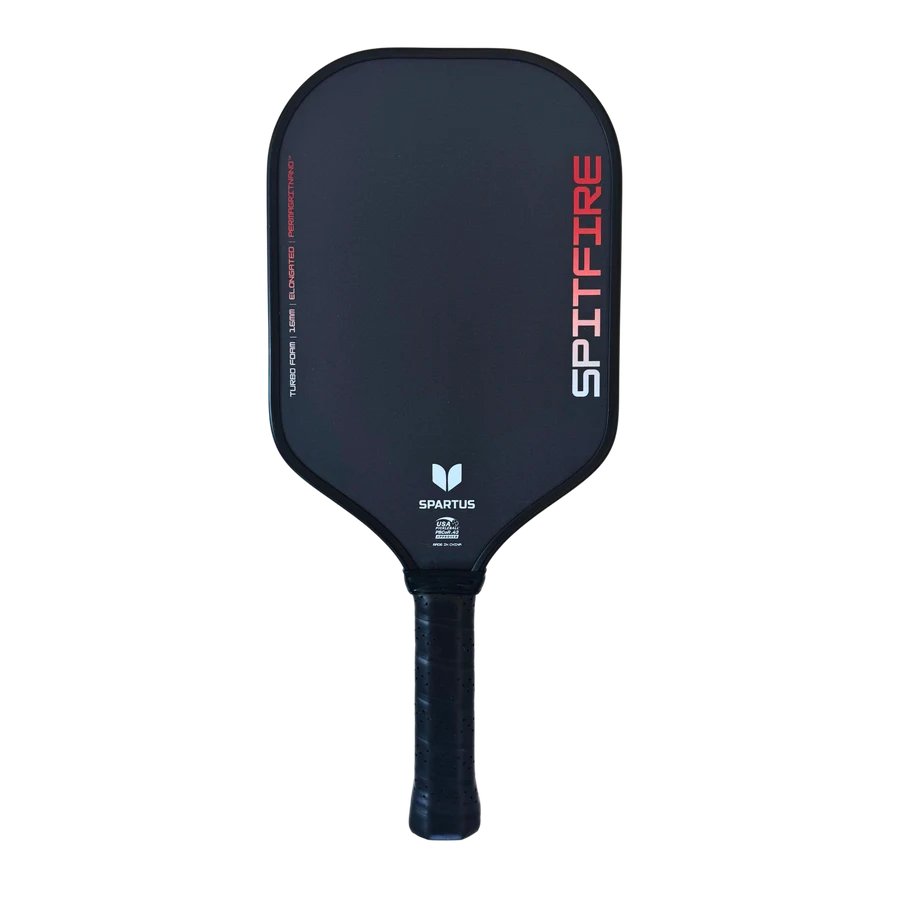
- vs. Spartus Spitfire ($99 with code): the
awkward one. On Studio's rig the Spitfire actually spun a little more, and it
plays well stock with no break-in. The Jade wins on feel and on how long the
grit lasts. At $130 more, that's a real decision.
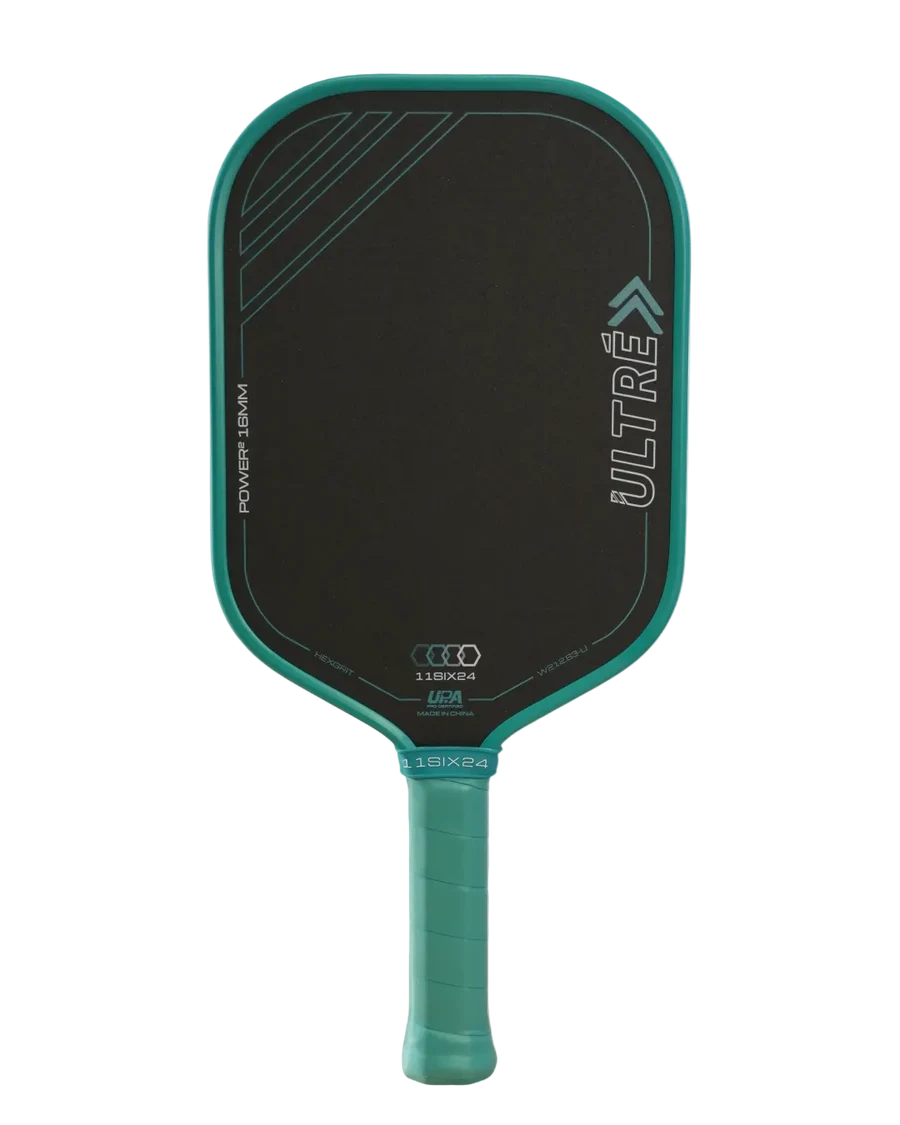
Compare them side by side - vs. 11SIX24 Power 2 Ultré: both have
durable grit and both run on foam that gets better with time. The Ultré
is crisper and poppier and costs less. The Jade has the feel I wanted and
it's USAP-approved, while the Ultré is UPA-A only.
Compare them side by side
Four RPM releases, four paddles I've liked. I don't know another brand that's on that kind of run right now.
Who should buy it
The player who wins with spin and shape rather than raw pace: drives that dip, speed-ups you roll, drops with topspin. Especially the Friction Pro or V2 fan who tried the Q2 and couldn't keep it in the court. You'll get the feel you liked back, with more spin and grit built to last.
Go in knowing two things. You need to give it about five hours before you judge it, and you'll probably want lead tape. If you'd rather play a paddle stock out of the box, or you bought into the Q2 because of the power, look somewhere else. So did it live up to the hype? For me, yes, which I wasn't sure was possible.
How I tested
Eighteen hours on the 16mm Elongated: drilling sessions with a 2.5 partner, rec doubles, and one tournament. The early hours were stock; after the tournament I added lead tape, half a gram per strip, from the throat to about halfway up the edge.
I don't own a bench rig. The rail shows RPM's published numbers. The spin figure is Pickleball Studio's measurement, the only published lab spin number on the Jade so far. The twist weight comparison uses RPM's 6.2 against the 145 paddles in my database with a published twist weight. If the grit goes bad in my hands, it gets added to this review.
RPM sent this review unit after release and is an affiliate partner, and code NICOTHELEFTY takes it to $229.50. They didn't see this review before you did.