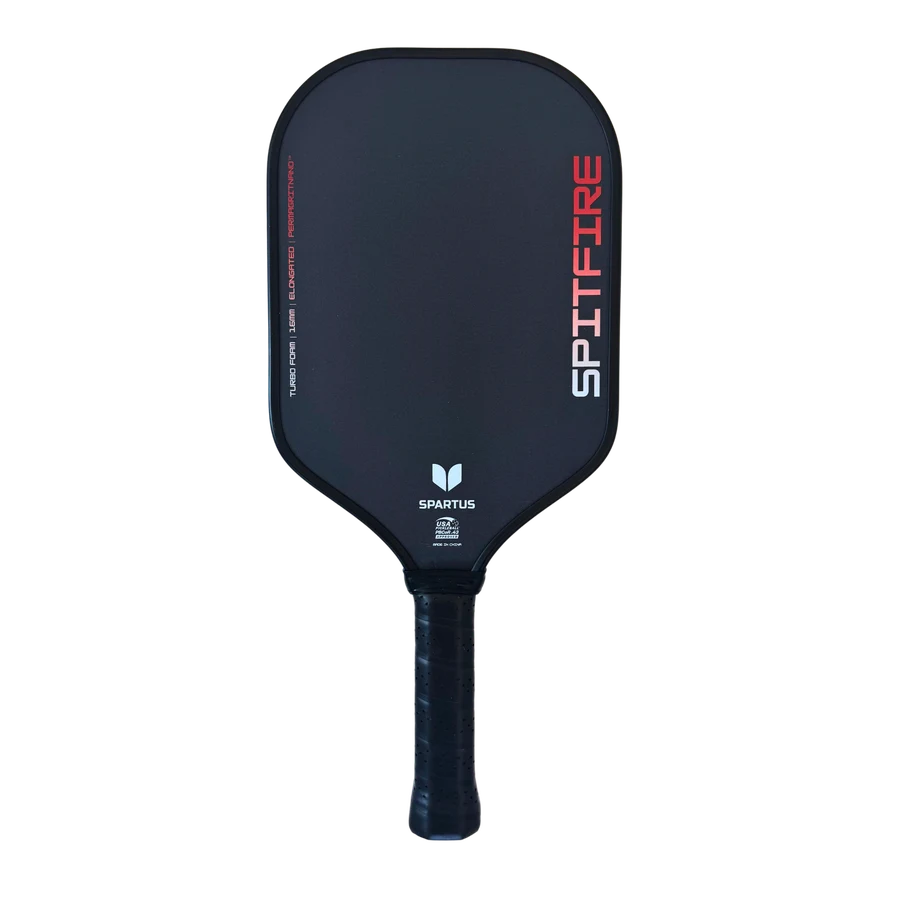
Ten days ago I put a rule in writing: any paddle that launches without durable grit is a no for me. Then I had to sit down and review the Spitfire, a $99 paddle whose grit sits one tier below the best, whose spin embarrasses paddles costing twice as much, and which I haven't been able to put down since August.
So let's find out together whether I'm a hypocrite. Short version: the rule survives, the Spitfire passes, and this might end up the paddle I recommend more than any other this year. A top-five paddle at $99 is basically unheard of, and I want to be careful with the next thousand words because I know how that sentence sounds.
The spin is a problem for everyone else
John Kew measured the Spitfire at 2,433 RPM. In his database of 471 paddles, that's the third-highest spin number ever recorded, and it's the highest of any paddle in my own database. Matt's Pickleball got 2,347, which lands in his 96th percentile. You feel it on the first serve. Topspin drives pull down inside the line, rolls kick after the bounce, and the bite is there on slow swings too, so you're not loading up just to shape a drop.
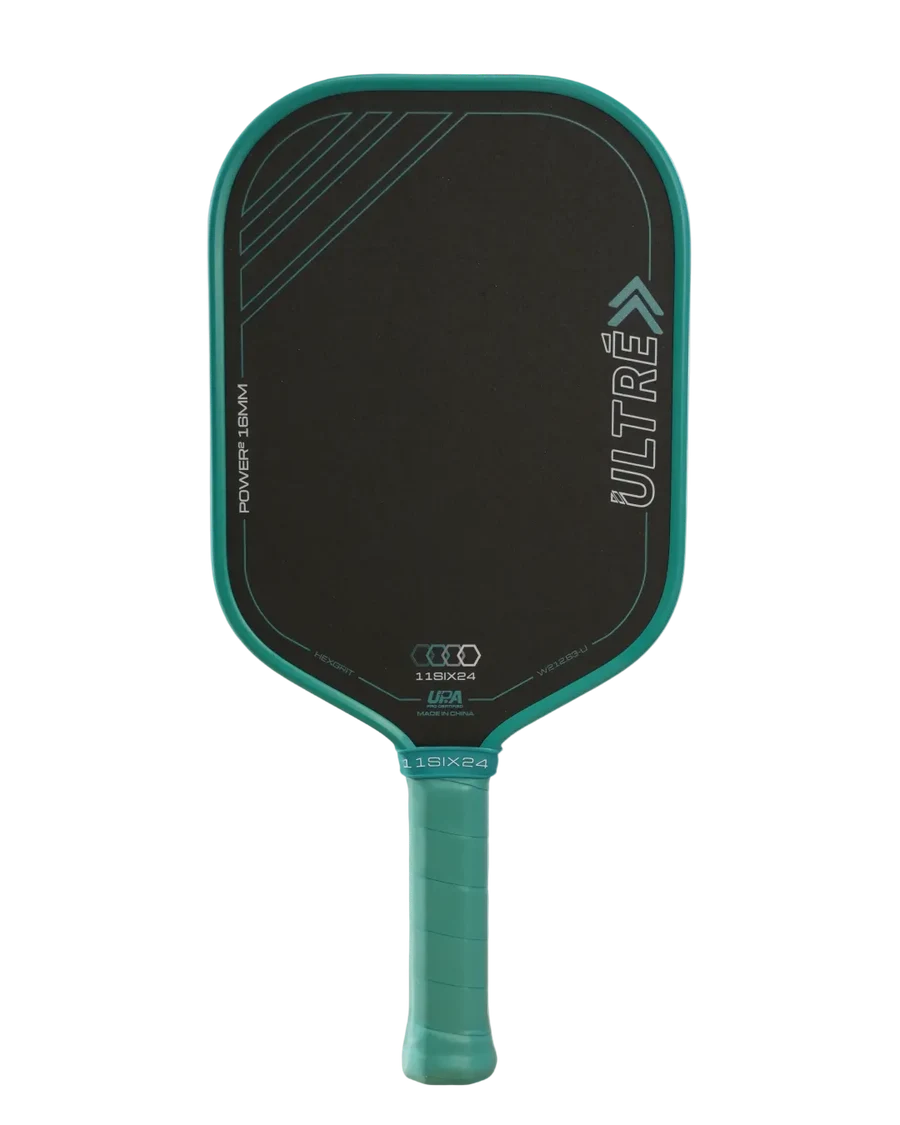
It hangs with the best spin faces I've played, the Power 2 Ultré and Honolulu's J6CR included. Those are $195-plus paddles. This one is $99 with code NICOTHELEFTY, and Spartus's own spec sheet says "2,100+ RPM," which means the one brand undershooting its marketing claims is also the one charging half price. I don't know what to do with that either.
Two grit tests, two answers, and my fifteen hours
Now the asterisk, because the surface is where the arguing happens. The Spitfire's PermaGritNano is a grit-infused peel ply: real durable-grit technology, but a different and cheaper kind than the bonded-particle PermaGrit on Spartus's own P1. Two testers took a run at how long it lasts and came back with different answers:
- John Kew ran an impact test, 100 hits at 70 mph on two separate units, and measured about a 14% spin loss. That's his Tier 3: a genuine step up from raw carbon, which loses 20 to 30%, but not elite.
- Pickleball Effect ran an abrasion test on the same surface and rated it Tier 1. That's the number Spartus quotes on the product page. Notice which test made the marketing.
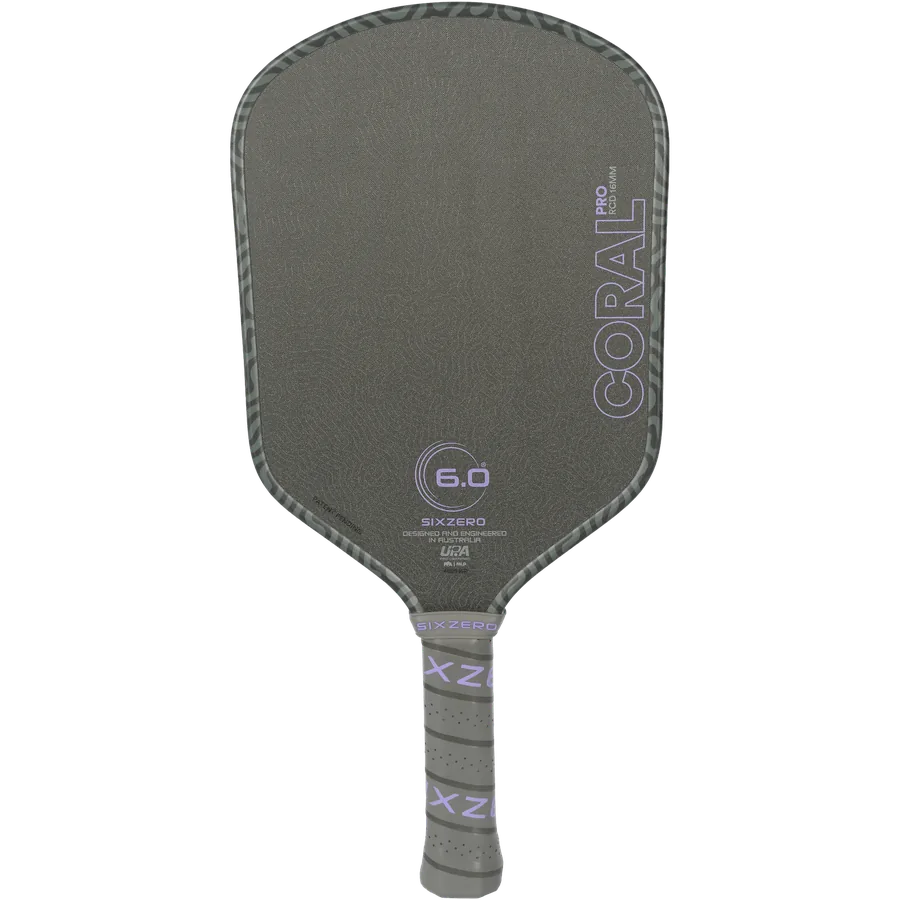
Neither is wrong; they're measuring different kinds of wear. Here's my data point: fifteen hours across five sessions, and I can't find any drop-off in grit or spin. Zero. So the rule I wrote in the Ultré review survives on a technicality that isn't a technicality. This IS durable grit, just not first-tier durable grit. I don't believe it's in the same league as the Ultré or the Coral Pro for longevity, and I'll say so plainly. The spin, though, is just as good. Maybe better. If that changes in my hands, I'll say so here.
The Goldilocks paddle
Kew's lab puts the Spitfire in his Power category, and I'd place it right on the border of all-court and power, leaning power. That's exactly where I think most players should be shopping now. If you play with a Lifetime LT48, you don't need a rocket. The ball already provides enough on its own, and a paddle that borders those two categories gives you the pace without constantly hitting out balls. That balance might be the real reason it hasn't left my bag.
There's no learning curve, which I can't say about my other favorites. The Tide took me two games of hitting tape. The Ultré wanted weighted tape at the throat. The Spitfire I played well with in the first eleven points, and it's the rare paddle I run completely stock. It ships with three grams already built into each side at three and nine o'clock, so the tuning is done at the factory. If you want more control, add weight at the throat; more stability, add it at the sides. I find it's better without any.
One thing my hands got wrong in August: when I played this right after the Tide, I called it a boat anchor. The scale says otherwise: at 7.8 ounces it's lighter than almost every elongated out there. What I was feeling is the balance point, which sits well forward, so the mass rides in the head and the ball carries through contact. Plow, not pop. Once you know that's the personality, it stops feeling heavy and starts feeling deliberate.
Where it lets you down
The longevity question is real and I've already given it its own section. The other honest gripe is shape: at the time of testing the Spitfire comes in elongated only. A widebody looks to be on the way, and there's no hybrid and no flat top, which, if you read the Ultré review, you know is exactly the shape I'm hunting. The day Spartus ships this build in a flat-top hybrid is the day I lose a whole weekend.
And if you want the ball to jump off the face, this isn't that. The pop is restrained on purpose. It keeps hands battles controllable, and it means boomstick people should look elsewhere, though they probably don't need all that pop either.
How it stacks up
- vs. Spartus P1 ($219.99): their own flagship, and the awkward conversation at Spartus HQ. The P1 is denser, stiffer, and its grit is genuinely more durable. But the Spitfire matches its spin, beats it on firepower in Kew's lab, and costs $120 less. I think it's the better paddle, full stop, not just the better value. Buy the P1 for the grit warranty; buy the Spitfire for everything else.
- vs. 11SIX24 Power 2 Ultré: the spin
king versus the grit king. Spin is a coin flip. The Ultré's HexGrit will
still be biting long after questions get asked of this face, and it's twice
the price for that insurance. The certification flips the math for
tournament players: the Ultré is UPA-A only, the Spitfire is USAP-approved.
If your events are USAP-sanctioned, the Spitfire might be the best legal
spin paddle you can buy at any price.
Compare them side by side - vs. Speedup Tide 14H: opposite tools. The
Tide holds the ball and hands you touch; the Spitfire rides the head-heavy
balance and buries topspin at people's feet. The Tide is the one I trust in
a hands battle or a firefight; the Spitfire I like more once the ball has
bounced. At $153 and $99 with code, owning both costs less than one Ultré
and a tank of gas.
Compare them side by side - vs. MARK unMARKed 2026: the $190 power
paddle everyone's arguing about. It hits harder than anything in this
class, and the Spitfire can't match that. But the Spitfire has Tier 1 grit
on Kew's rig, USAP approval, and a $90 head start, which is why it keeps
coming up in every thread about the unMARKed.
Compare them side by side - vs. Gearbox Pressure X 8E: Gearbox
put the Spitfire on its own test rig next to the Pressure X, and it came
within half a mph on peak ball speed. The 8E has more dwell and a softer,
more controlled feel, and it's my current main. It's also $252 with code
against $99. You're paying for feel, and the Spitfire is still the value
pick.
Compare them side by side
Two paddles on the horizon should give the Spitfire a real fight in this price-and-spin class: the Vatic Pro V-Sol Tour and Enhance's Turbo with their Armor Grit face. We'll see how they stack up.
Who should buy it
The spin-first player who refuses to spend $200, and the USAP tournament player who legally can't use half the spin paddles on this page. It's also the right call for anyone who wants one do-everything paddle with zero setup work: no tape, no adjustment period, no manual. At $99 with code NICOTHELEFTY, this is the easiest recommendation I've made on this site.
Skip it if long-haul grit certainty is non-negotiable for you, if you need a shape other than elongated, or if you measure paddles by how hard they can accidentally hit the fence.
How I tested
Fifteen hours across five three-hour sessions, all since early August, much of it back-to-back with the Tide 14H and the Power 2 Ultré.
I don't own a bench rig. The rail numbers are averages of the measurements published by John Kew and Matt's Pickleball, who land close enough to each other that the average means something. The durability tiers come from Kew's impact testing and Pickleball Effect's abrasion testing, credited above. If the grit story goes bad in my hands, it gets added to this review.
Spartus sent this review unit and is an affiliate partner — code NICOTHELEFTY takes the Spitfire to $99. They didn't see this review before you did.