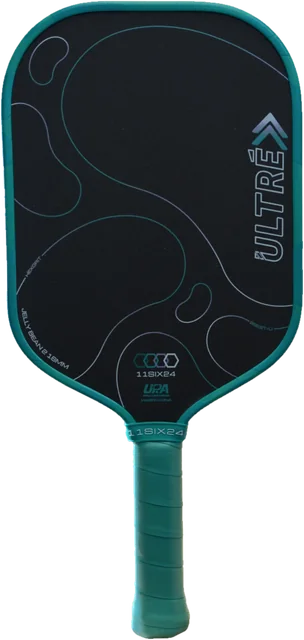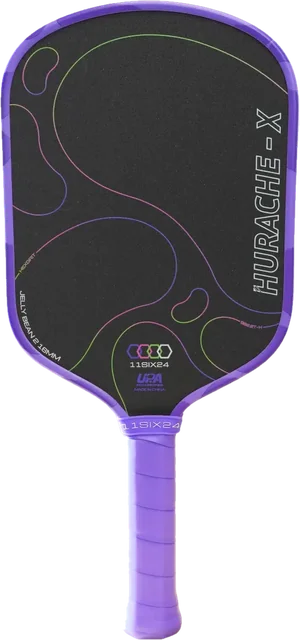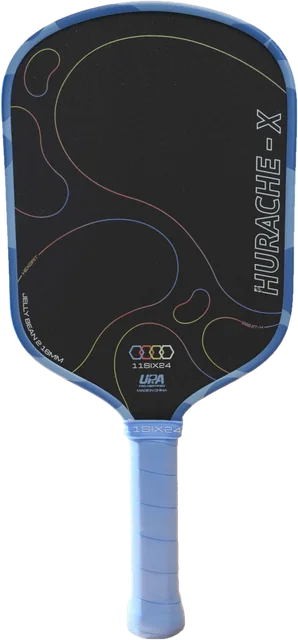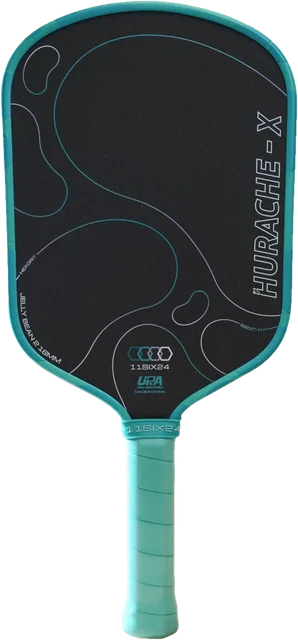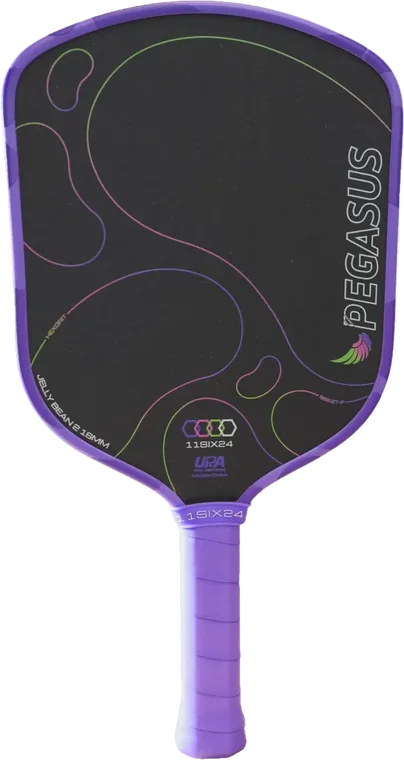
"I hate this paddle." That was hour one. Too soft, no pop, like someone handed me a Gen 1 paddle and told me it was 2026. I got through one game, barely, and put it back in the bag.
That's on me. I came into this with a closed mind, because I already knew the Jelly Bean 2 wasn't going to be for me. I was right about that part. What I had wrong was the assumption underneath it, which is that a paddle not being for me says anything about whether it's good.
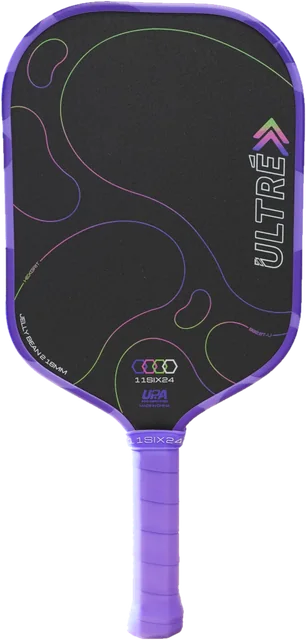
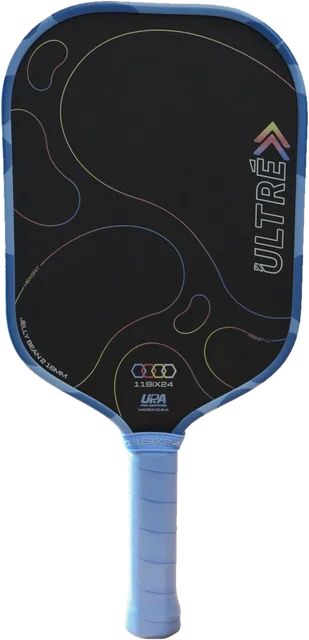
My bias, so you can adjust: I'm a lefty, a recovering power player, and four weeks ago I gave the Power 2 Ultré a 9.2. Same brand, same face, opposite personality. I like a paddle that hits.
This one doesn't. I'd never put it in my bag, but it's the one I'd hand a student.
Control is a superpower. It just isn't mine.
The second session is where it turned. Two RPM Q2s and a Boomstik were on that court, one of them on my side, and then me, holding what felt like a loaf of bread. Three hammers and a feather. Somewhere in the first few points I stopped trying to match anybody and started using their pace against them. Slow it down. Take the speed off. Make them hit one more.
We won that match.
Control is a genuinely different feeling than power, and I don't think I'd ever sat with it long enough to notice. Power is aggression. This is the ice to everybody's fire, and it turns out that feels good to have in the bag, even if it's a feeling I had to be talked into.
Everything soft got easier. Drops, dinks, resets, all of it, immediately and with no adjustment period. The surprise was that drives got easier too, which I did not expect from a paddle this quiet. What you never get is free pace. 11SIX24's own line is "that paddle hits; this paddle plays," and for once the marketing is accurate, which in this industry is worth pointing out.
The numbers say the same thing in a flatter voice. Matt's Pickleball clocks serve speed on all four shapes between 59.8 and 59.9 mph, which is his field average almost exactly. I'll say plainly that I don't believe that number, and I trust his rig more than I trust my own arm. I could not get a ball over 50 mph with this paddle if you paid me to. He has a radar and I have a feeling, so you're getting both. Either way his phrasing is the best summary anyone has written of this paddle: it doesn't give up pace, it just doesn't add any. On my own scale it's a 4 for power and a 4 for pop against a 9.5 for control, which is the highest control number I've given anything.
The grit is the most-tested surface on the market
Four weeks ago I put a rule on the record: any paddle that launches without durable grit is a no from me. This is the same HexGrit face as the Power 2, and it's the most-documented surface in pickleball right now.
John Kew ran 200 cannon impacts at 70 mph on a Jelly Bean 2. It started at 2,350 RPM and finished at 2,430, which is to say it got grittier. A raw carbon control paddle lost 33 percent over the same test, two thirds of that in the first 50 hits. Chris Olson tracked a HexGrit face across 500 games and watched it go from 2,122 to 2,117 RPM. I still don't understand how a paddle face gets grittier by being hit 200 times, but rumor has it John Kew has never been wrong about anything in his life.
Kew reported raw carbon’s total loss and that two thirds of it came in the first 50 hits, so its 50-hit point is worked out from that. HexGrit points are his measured RPM.
Nobody has hour-stamped a retail Jelly Bean 2 over months yet, and the EMA foam core is brand new with no long-term data on it at all. But the face is as close to a settled question as this industry gets. If you're buying this paddle for someone who's going to play it into the ground, that matters more than anything else on the spec sheet.
I probably picked the wrong shape
I played the Hurache-X, the elongated one, and I'd tell you to pick differently.
Here's the thinking I should have had before I picked it up. The Hurache-X has the longest handle of the four at a full six inches, which is why a lefty with a two-handed backhand reaches for it. It also has the lowest twist weight in the line at 6.0, against 7.15 on the Pegasus, and Matt scores it 60 out of 100 for control while the Pegasus gets a 90. It is the least forgiving shape of a paddle whose entire argument is forgiveness.
So I spent my first sessions playing the control paddle in its least control-oriented trim, and then got annoyed that it didn't do what I wanted. Some of that first-hour reaction is mine. Some of it is the shape.
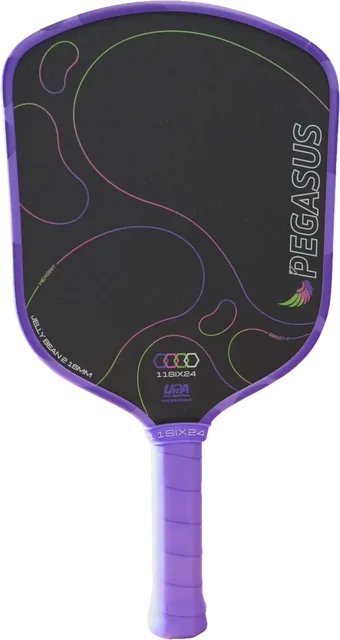
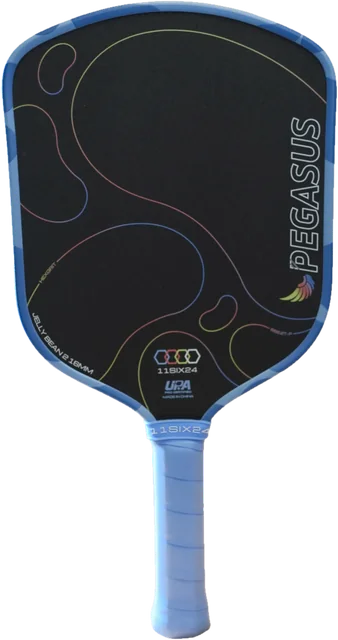
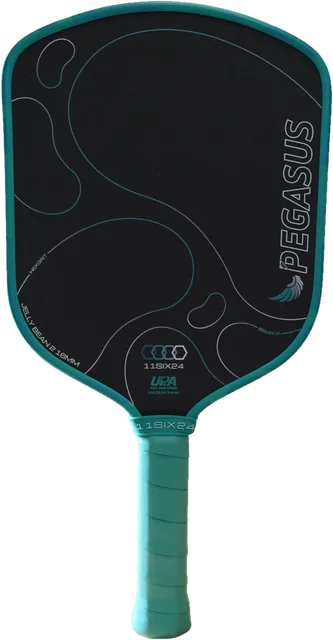
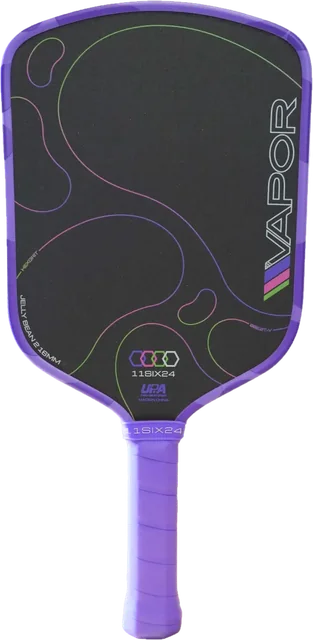
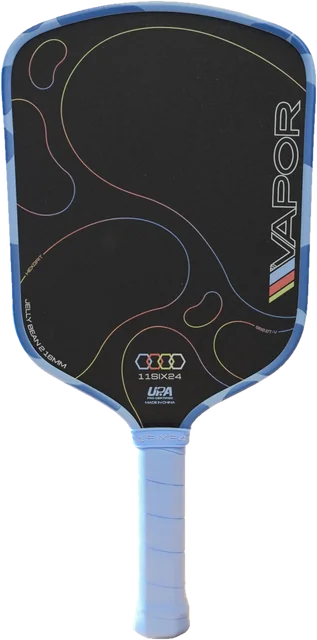
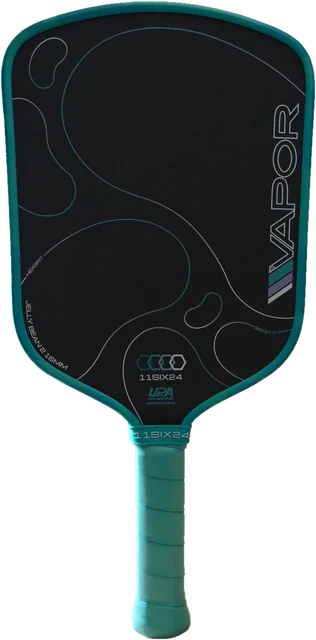
If you're buying this paddle at all, you're buying it for what it does softly, so buy the shape that leans all the way in. That's the Pegasus, the widebody, which is the most forgiving in the line and the one Kew called one of the more meaningful upgrades he's seen a brand make to its own entry-level paddle. The Vapor is the hedge if you want a hybrid instead, and it's the one Pickleball Effect ranks first among control paddles. Take the Hurache-X only if the six inch handle is non-negotiable for you, and go in knowing what you're trading.